Crystal Vibes
Smart Dock Dispatch
Start from the nearest UrbDock dock. The station verifies the parcel, creates the order, and dispatches the closest ready drone toward a bus-first relay path.
Once the package enters the dock, it is no longer a passive parcel sitting in a locker. It becomes a live logistics object. The dock records the package, confirms the destination label, checks basic weight and volume information, and connects the order to the drone and vehicle relay network.
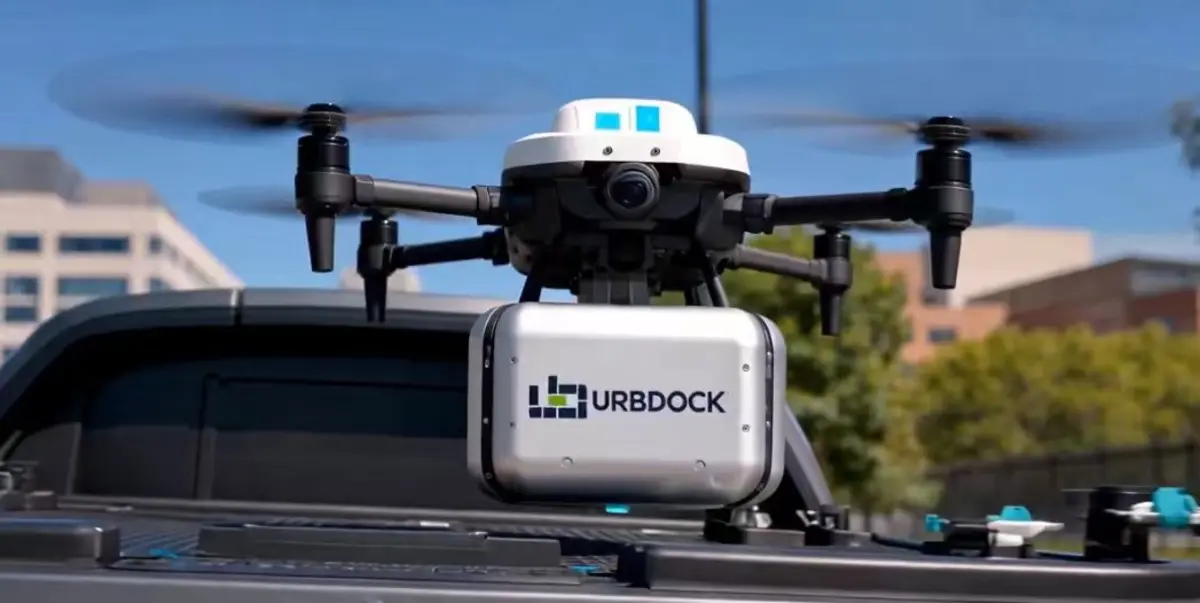
If a drone is already stationed inside or on top of the dock, it can be dispatched immediately. If a drone is currently riding on a nearby bus or registered private vehicle, the platform can instruct it to approach the dock when the timing is right.
No Shortcuts
What The Dock Actually Does
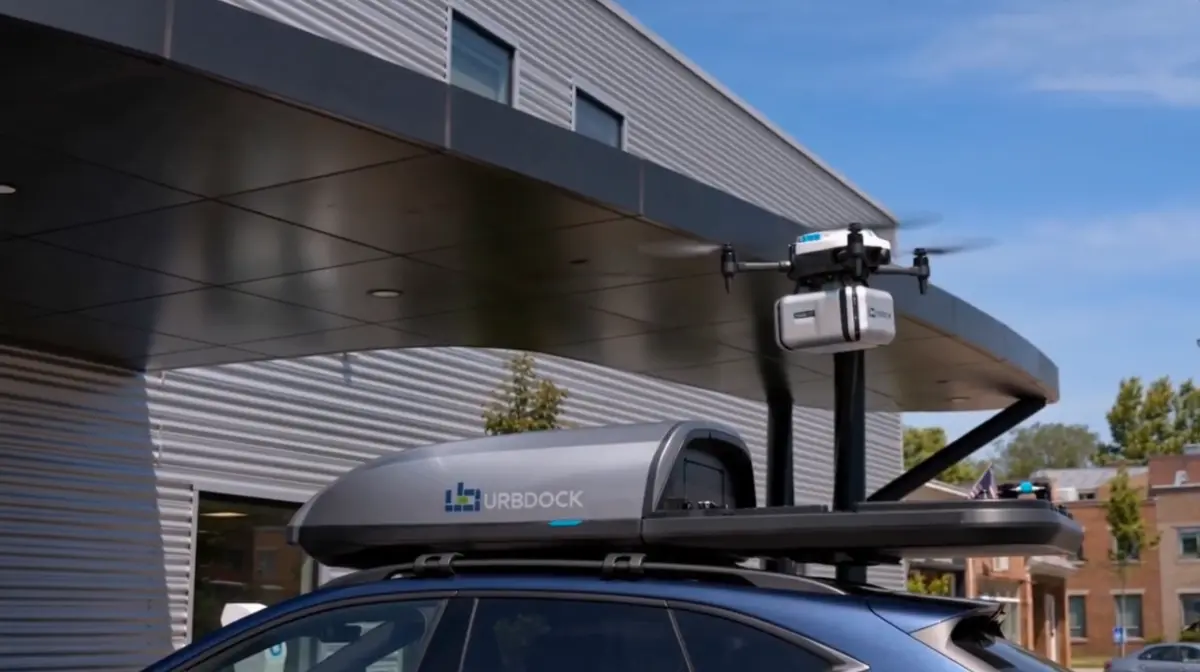
The UrbDock station is not a normal parcel locker. It is a package intake point, drone charging point, rooftop landing interface, sensor node, and dispatch gate. It combines the functions of a smart locker, a neighborhood logistics station, and a drone micro-depot into one piece of city infrastructure.
Inside the dispatch process, the station performs four jobs. First, it receives the parcel securely. Second, it creates and uploads the digital order through the mobile app. Third, it confirms that the package can enter the drone-vehicle relay network. Fourth, it triggers the first routing decision: should the drone fly to the next approaching bus, wait for a better public-transit relay, or connect with a registered private vehicle whose route matches the package direction?
The difference
Bus-First Dispatch Logic
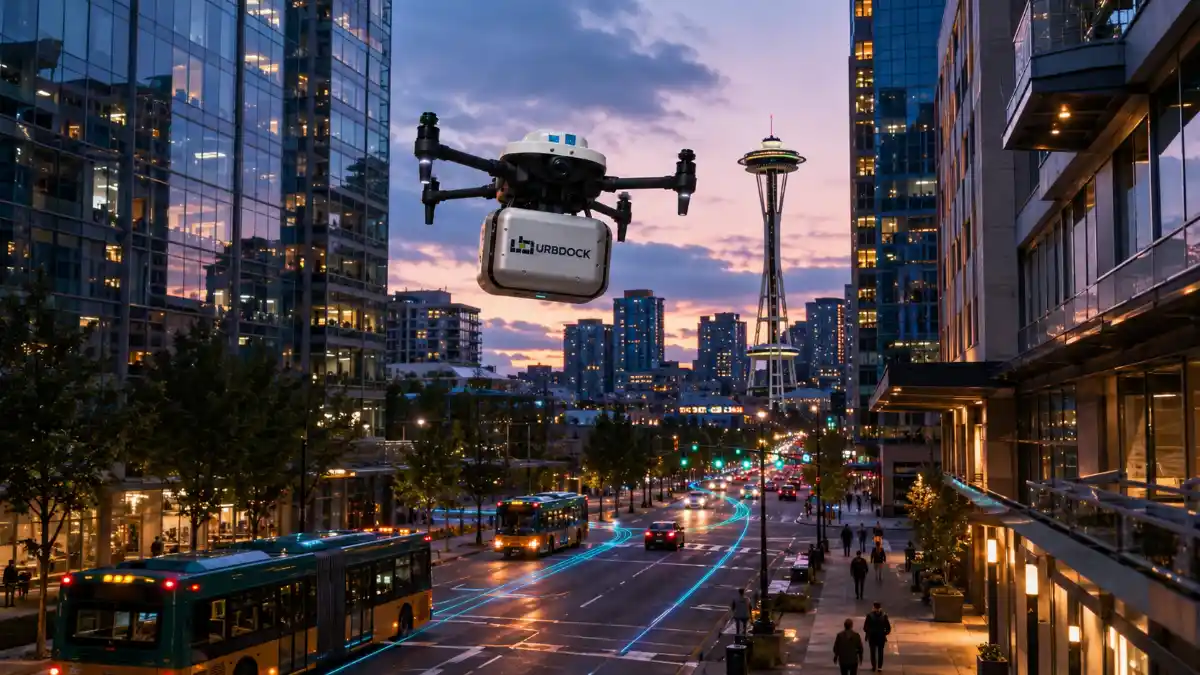
The preferred first movement is usually toward a bus rooftop platform. A bus route is predictable, stable, and already moving along a public corridor. UrbDock uses this predictability to reduce the need for long drone flights. The drone only needs to make a short controlled jump from the dock to the bus rooftop platform, then lock, charge, and ride while the bus continues its normal route.
This bus-first logic is important for both safety and economics. It keeps drones from flying long distances in dense urban areas, uses vehicles that are already moving, and gives public transit systems a new passive logistics revenue layer without changing passenger service.
No Shortcuts
Private Vehicle Backup And Route-Matching
If a bus relay is not the best immediate option, UrbDock can match the order with an approved private vehicle. A registered private driver has already joined the network through the app and entered a planned route, such as home to work, work to school, or a daily commuting corridor. The driver does not need to understand the parcel route or drone decision-making. The system uses the vehicle’s approved path, timing, direction, and rooftop platform availability to decide whether it can serve as a short relay point.
This creates the first commercial signal in the order: a private vehicle can generate revenue not only by actively accepting a delivery task, but also by passively carrying a drone for a short segment while following its normal route.
The difference
Recipient-Side Dock Pickup
The same dock logic can also work at the destination side. For standard service, the package can be moved toward the closest UrbDock station or smart hive near the recipient, where the recipient retrieves it by phone verification. For premium service or special cases, a registered private vehicle can complete the final short handoff. The website should present dock pickup as the default low-cost, high-density model, and private car handoff as an optional high-service layer.
No Shortcuts
Commercial Meaning
Commercially, the dock converts scattered individual pickup points into concentrated neighborhood logistics nodes. A logistics company no longer needs a van to stop at every address for every small parcel. Instead, parcels enter the network at station points that can connect with drones, buses, and registered private vehicles. This reduces fragmented pickup demand and creates monetizable infrastructure at bus stops and neighborhood entrances.
For station owners, property groups, transit partners, or city infrastructure partners, the dock can become a revenue-generating node. It can support parcel intake fees, short storage, drone charging, package verification, and relay dispatch. For UrbDock, the dock is the beginning of the order ledger: every parcel entering the dock can generate platform service revenue and downstream settlement events.